Roasting looks simple from outside the machine: green coffee goes in pale and grassy, brown coffee comes out smelling like coffee. Inside those minutes, the beans pass through a sequence of physical and chemical changes that the roaster is managing second by second. Small-batch roasters in Waxhaw, including Sospeso Coffee Roasters, work through the same stages as industrial plants. The difference is batch size and attention, not the physics.
- Charging. Green beans, which are dense, pale, and smell faintly of grass and grain, are loaded into a drum preheated to a chosen temperature. The drum temperature drops sharply as the cold beans absorb heat.
- Drying stage. For the first several minutes the beans mostly lose moisture and turn from green to yellow. Little browning happens yet. Rushed drying shows up later as uneven flavor, so this stage sets the terms for everything after.
- Browning. As temperatures climb, sugars and amino acids react and the beans turn tan, then light brown, and the room starts to smell like toast and then unmistakably like coffee. Hundreds of aromatic compounds form in this stage.
- First crack. Steam pressure inside the beans literally cracks them open with an audible pop, similar to popcorn but quieter. This marks the point where coffee becomes drinkable in the light-roast sense, and roasters log the exact time it starts.
- Development. After first crack, the roaster decides how long to let the roast run. Short development keeps acidity and origin flavors bright. Longer development builds sweetness, body, and roast character, and pushing on toward second crack produces dark roasts with oils on the surface.
- Cooling and resting. Beans are dumped into a cooling tray and stirred while air pulls the heat out fast, stopping the roast where the roaster chose. Then the coffee rests for days while it releases gas, before it is ready to brew.
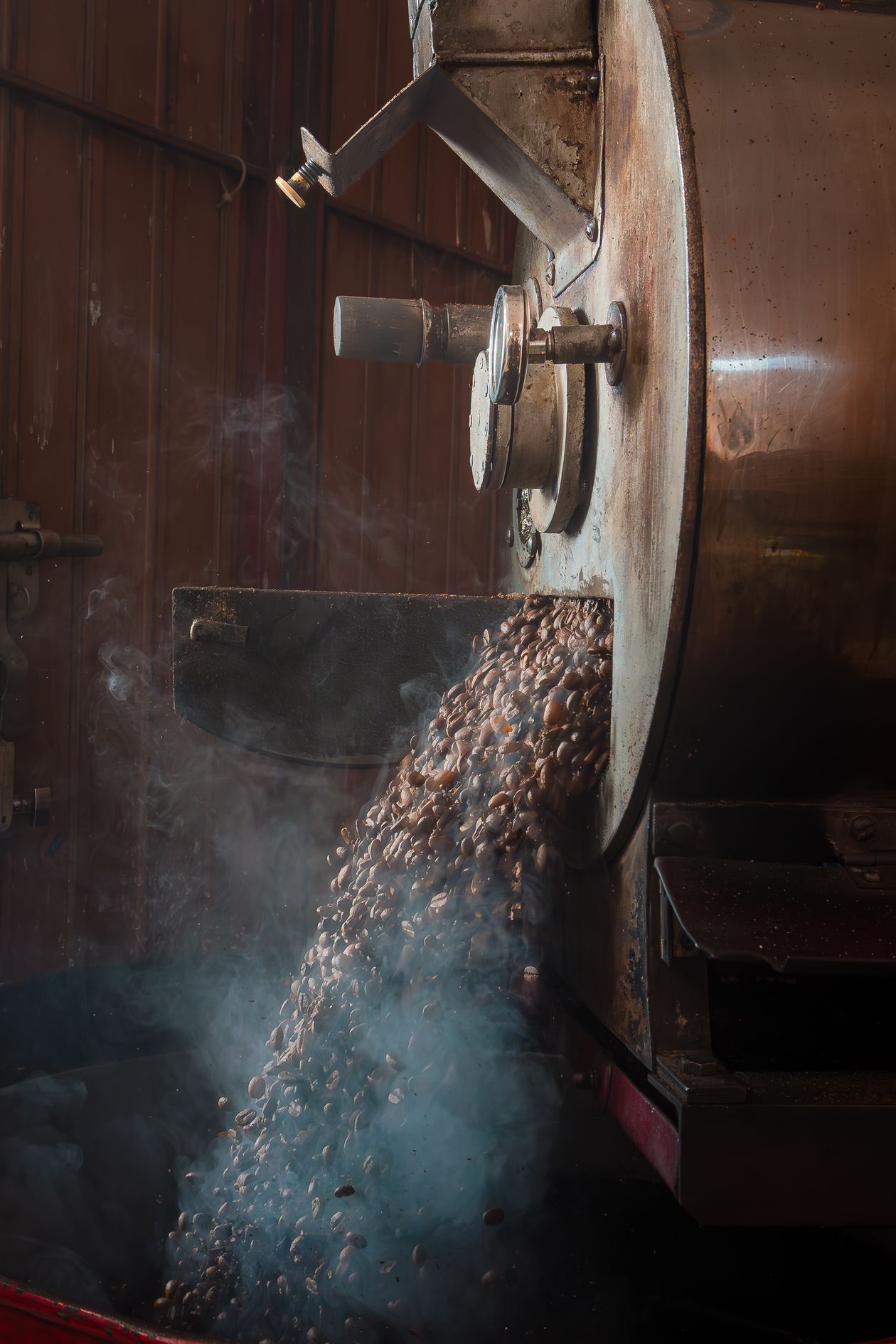
Why small batches taste different
A small roaster can roast a coffee, cup it the next day, adjust the profile, and roast again within the week. That feedback loop, taste and adjust, is how a roast profile gets built around a specific bean rather than a generic setting. Small batches also sell through quickly, so the bag a Waxhaw customer carries home was usually roasted days ago, not months.
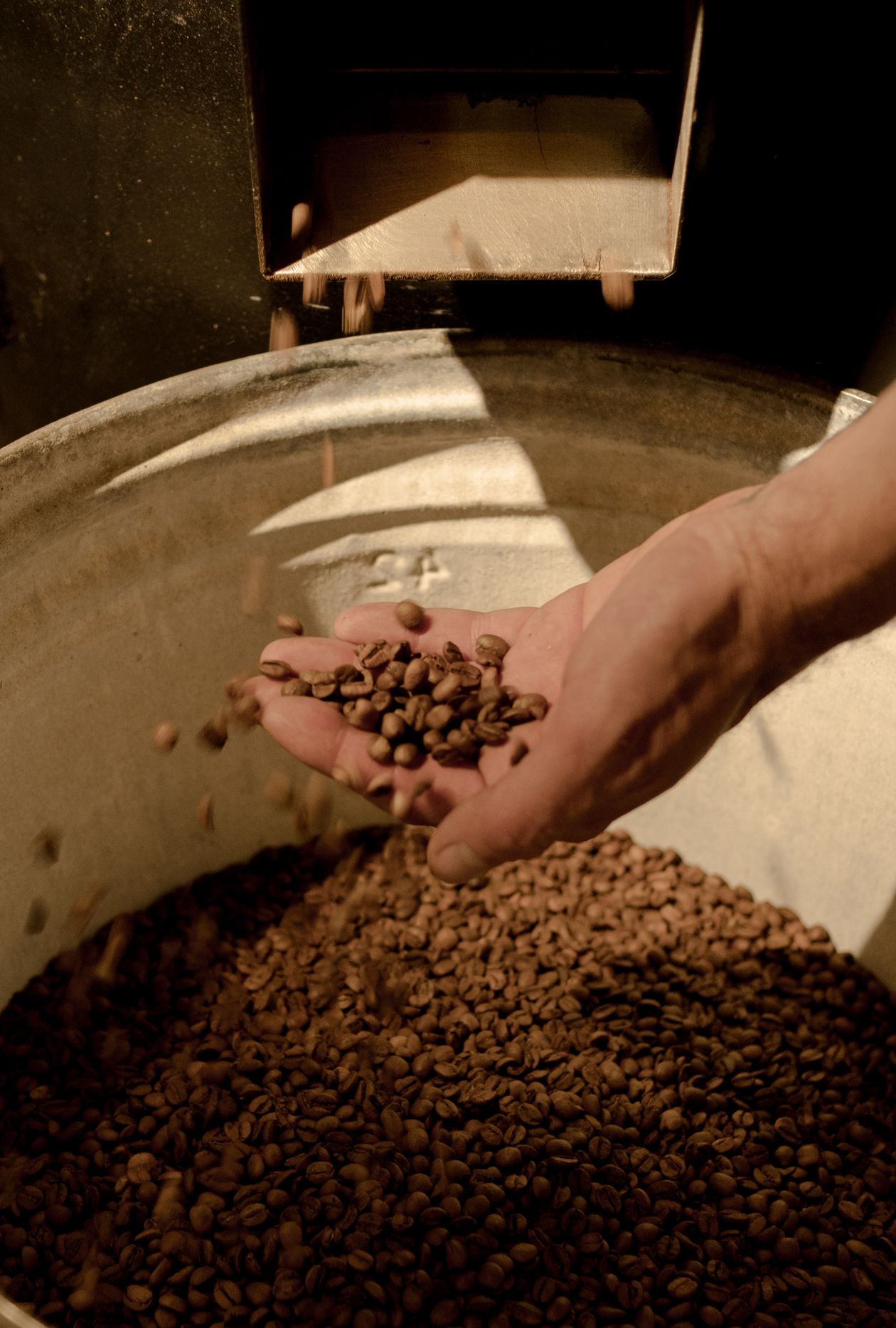
What the roaster is really deciding
Every coffee arrives with its own raw material: sweetness, acidity, and flavors set by the origin, variety, and harvest. Roasting cannot add what is not there. It can only present it clearly, soften it, or bury it under roast flavor. When a roaster says a profile is built to show the bean rather than the roast, this is the choice they mean, stopping development while the coffee still tastes like where it grew.
Tasting the roast: how profiles get approved
A roast is not finished when it cools. Roasters taste, or cup, each new coffee and each adjusted profile, brewing it in a standardized way and judging sweetness, acidity, body, and defects against what the coffee should be. A batch that comes off the roaster can look perfect and still be rejected at the cupping table for tasting flat or baked, flavors that indicate the heat stalled mid-roast. This is the unglamorous step that separates roasting as a craft from roasting as a cooking time, and it is why profiles drift and improve over a season with the same green coffee.
Resting, blending, and bagging
After cooling, coffee rests while it degasses, and roasters time bagging around it, sealing too early can puff bags with gas, and waiting too long starts the freshness clock early. Some coffees are roasted to stand alone as single origins. Others are blended, with different coffees roasted separately for their own profiles and combined afterward to build a balanced, consistent cup, which is how most espresso blends are made. Both approaches are legitimate; blending is about consistency across a year, single origins about the character of one place and harvest.
Common questions
What does first crack mean on a coffee bag description?
It is the audible stage where beans fracture from internal steam. Roasts are often described by how far past first crack they were developed: less for light, more for dark.
Why do dark roast beans look oily?
Longer, hotter roasting drives the beans' natural oils to the surface. Oily beans are a sign of a dark roast level, not of higher quality or freshness.
Can I roast coffee at home?
You can, in a heavy pan or a popcorn popper, and it teaches a lot. Expect smoke, chaff everywhere, and very uneven results compared to a drum roaster.
Photos in this guide are representative stock images.
← All guides from Sospeso Coffee Roasters← Back to Sospeso Coffee Roasters